

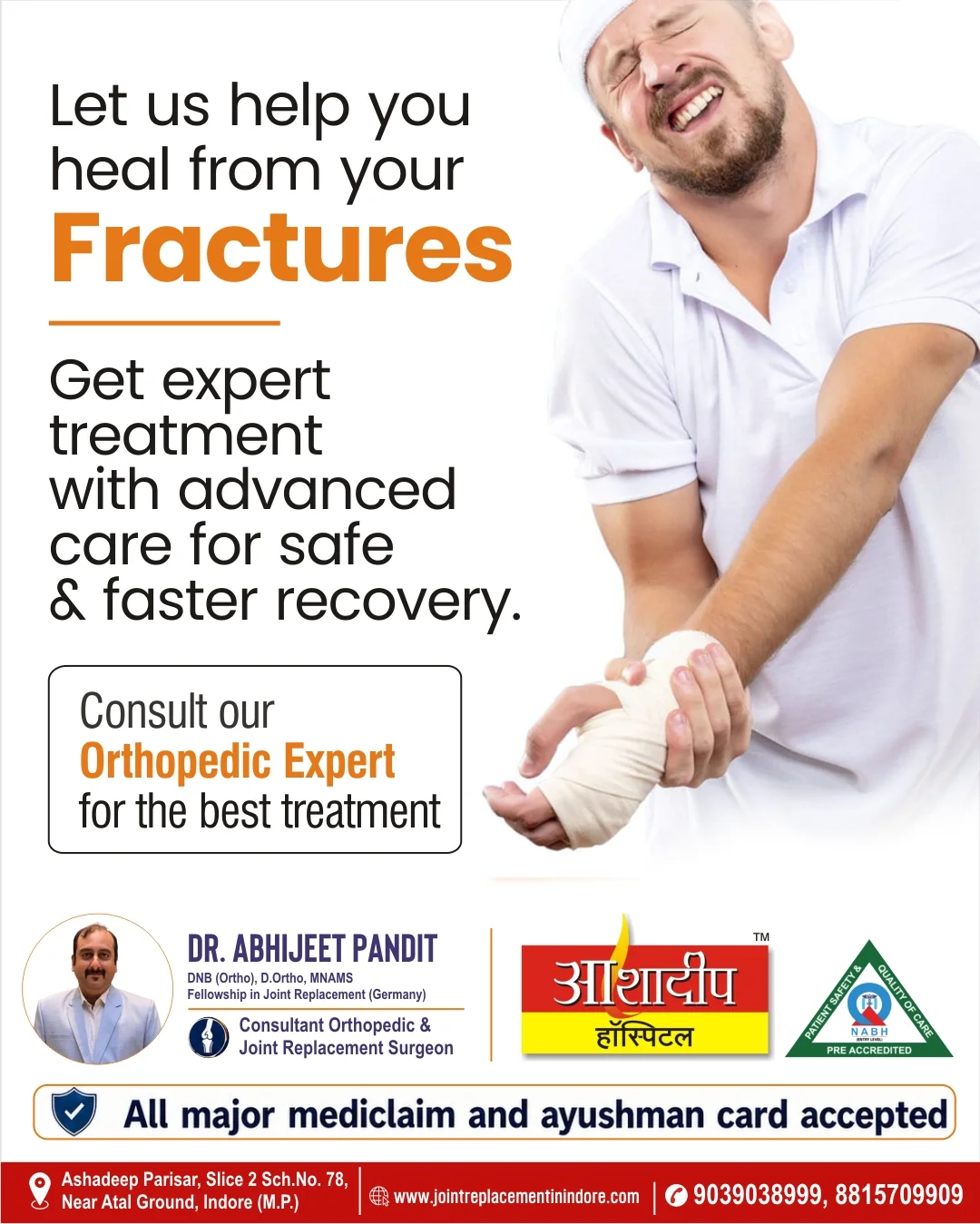
A fall on the stairs, a sports collision or a road accident can turn an ordinary day into a painful experience. When an injured arm or leg becomes swollen or difficult to use, understanding the next step matters. Fracture treatment in Indore begins with medical assessment and continues through protection of the injured bone, follow-up visits and a planned return to activity.
A fracture is a partial or complete break in a bone. Treatment may involve a splint, cast, repositioning of the bone or surgery, depending on the injury. The aim is to support healing while protecting movement and function.
For an orthopaedic consultation, you can contact Dr. Abhijeet Pandit at Ashadeep Hospital and ask about appointment availability. Serious injuries require immediate emergency care rather than waiting for a routine appointment.
How Can You Recognise a Possible Fracture?
Common bone fracture symptoms include pain, swelling, bruising and tenderness around the injured area. The limb may look different from usual, or movement may become difficult.
The appearance of an injury alone cannot reliably establish its severity. If you suspect a broken bone, arrange prompt medical assessment instead of repeatedly testing the injured part.
When describing the injury, explain how it happened, where the pain is strongest and whether symptoms have changed. Mention previous injuries affecting the same area and any treatment already received.
Which Symptoms Need Emergency Attention?
Seek immediate emergency fracture care if there is:
A serious accident may involve injuries beyond the painful limb. Arrange emergency transport when needed, and do not drive yourself with an injury that affects safe vehicle control. These warning signs should not wait for a scheduled clinic visit.
What Should You Do Before Reaching Medical Care?
For a suspected fracture, stop using the injured area and support it in the position found. Do not attempt to straighten the limb, push exposed bone back inside or perform forceful massage.
Cover an open wound with a clean dressing. Avoid pressing directly on exposed bone. For a closed injury, a cold pack wrapped in cloth may help with swelling while you arrange assessment; keep ice away from direct skin contact.
After a major accident, avoid moving someone with a possible neck, back or hip injury unless they face immediate danger. Follow emergency professionals’ instructions. First aid provides temporary protection and does not replace bone injury treatment.
What Happens During a Fracture Assessment?
A clinician examines the injury and reviews how it occurred. An X-ray commonly helps identify the break and its position. The findings guide whether the bone needs support alone or further treatment.
For your orthopaedic consultation in Indore, bring available X-rays, earlier reports, prescriptions and a list of medicines. Tell the team about allergies and existing health conditions.
Useful questions include:
Does Every Fracture Need Surgery?
Treatment with a Splint or Cast
Many fractures can be managed without an operation. A splint or cast limits movement while the bone heals. Some injuries need repositioning before support is applied.
The choice depends on the fracture pattern, alignment and stability. Follow-up allows the treating clinician to check progress and adjust the plan when necessary.
When an Operation Is Recommended
For selected injuries, fracture surgery may be needed to reposition and stabilise the broken pieces. Internal fixation can involve plates, screws, nails or wires.
The implant used depends on the bone and fracture pattern. Ask your surgeon to explain the proposed procedure, its risks, alternatives and restrictions afterwards. Metal fixation supports the bone during healing; it does not mean the limb can immediately tolerate unrestricted activity.
Caring for a Cast at Home
Good cast care after a fracture helps protect both the support and the skin beneath it. Keep the cast dry unless the treating team specifically confirms that your cast and liner can get wet.
Avoid inserting objects to scratch inside it. Do not trim its edges, remove padding or change its shape yourself. Contact the treating team if it becomes damaged, excessively loose or uncomfortable.
Increasing pain, numbness, cold or blue fingers or toes, or an inability to move them needs immediate assessment. A foul smell, skin problems or discharge also requires prompt medical advice.
Before leaving the clinic, ask for written instructions and an appropriate contact route for problems outside appointment hours.
When Can You Start Walking or Exercising?
Fracture recovery varies with the injured bone, severity, age and other health factors. Some injuries heal over weeks; others need several months or longer.
Pain may improve before the bone is strong enough for normal loads. Do not use pain relief alone as permission to resume lifting, walking without support or playing sport.
After immobilisation, weakness and stiffness may need a gradual exercise programme. Follow the prescribed rehabilitation plan rather than copying another patient’s timeline.
Ask for practical instructions covering stairs, bathing, work and travel. If you need crutches or another walking aid, request a demonstration before going home.
Why Bone Health Matters After a Minor Fall
A fracture following a fall from standing height or less may indicate bone fragility, particularly in older adults. Treating the immediate injury is only part of the picture.
Ask whether an osteoporosis assessment or other bone-health review is appropriate. Previous fractures, nutrition, medicines and fall risk may influence that discussion. Prevention planning can include suitable activity, dietary improvement, smoking cessation and osteoporosis treatment when indicated.
Family members can help by discussing obstacles at home and arranging practical support for daily tasks during recovery.
Planning Follow-Up Care in Indore
When arranging fracture follow-up in Indore, consider how you will attend appointments with limited mobility. Patients travelling from Vijay Nagar, Palasia or elsewhere in the city should confirm appointment details and arrange assistance when required.
Keep reports together and maintain a short list of questions between visits. Record any new symptoms and when they began, so you can describe them clearly.
Before leaving each appointment, confirm the next review date, current activity restrictions and who to contact if a problem develops. A written plan makes it easier for patients and caregivers to follow the same instructions.
Frequently Asked Questions
1. Can every broken bone heal with a plaster cast?
No. Some fractures can be supported with a cast or splint, while others require repositioning or surgery. Examination and imaging help determine the suitable approach.
2. Does less pain mean the fracture has healed?
Not necessarily. Pain can settle before the bone regains sufficient strength. Your treating clinician should guide the return to normal activity.
3. What if my fingers become numb or blue inside a cast?
Seek immediate medical assessment. Numbness, colour changes, coldness or worsening pain can signal a problem needing urgent attention. Do not wait for your next routine review.
4. Will plates or screws always need removal later?
No. Some implants remain in place after healing; others may be removed in selected circumstances. The decision depends on the implant, fracture and individual clinical situation.
Take the Next Step Towards Informed Fracture Care
A bone injury deserves a clear diagnosis, an appropriate treatment plan and understandable recovery instructions. Knowing how to protect the injury and when to seek help can make the care journey easier to manage.
For fracture treatment in Indore, contact Dr. Abhijeet Pandit at Ashadeep Hospital to enquire about a consultation and discuss your reports. If emergency warning signs are present, go directly to the nearest emergency department.
Contact Us today to enquire about an appointment and your next steps after a bone injury.
| Tags: | #Fracture Treatment in Indore |


