


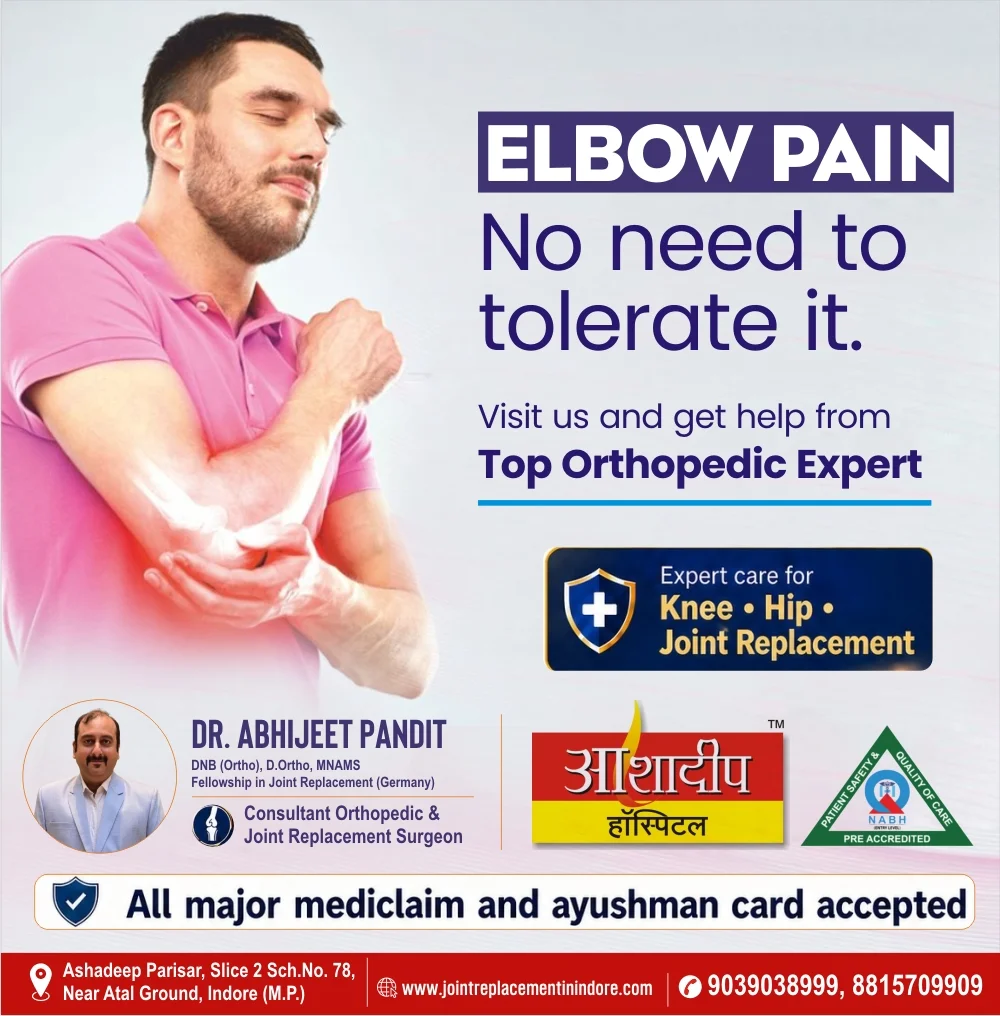
Lifting a cup, washing your face, or bringing a spoon to your mouth should not require planning around elbow pain. When stiffness and discomfort begin to interrupt these ordinary movements, the problem deserves a proper assessment. Understanding the cause is the first step towards choosing suitable treatment.
Patients looking for an Elbow Replacement Doctor in Indore can consult Dr. Abhijeet Pandit at Ashadeep Hospital to discuss their symptoms and treatment options. A useful consultation considers the joint damage, previous care, and the activities that matter most to the patient.
Elbow replacement surgery may be considered when severe joint damage causes substantial pain and difficulty using the arm. Possible reasons include advanced rheumatoid arthritis, osteoarthritis, arthritis following an injury, and certain complex fractures that cannot be reliably reconstructed.
For longstanding arthritis, surgery is usually discussed when suitable nonsurgical care no longer provides enough relief. A serious fracture may require a different treatment pathway. The decision depends on the condition of the joint, bone quality, overall health, and the demands placed on the arm.
In total elbow replacement, damaged joint surfaces are replaced with artificial components. These generally include metal parts and a plastic bearing that allow the reconstructed joint to move. The operation aims to reduce pain and improve useful movement for everyday activities.
Some injuries require replacement of only part of the elbow. For example, a radial head replacement addresses the upper end of the radius, one of the forearm bones. This is different from replacing the main elbow joint. Your surgeon should explain which structure needs treatment and why that particular procedure is being considered.
People often adjust their habits gradually, using the other arm or asking relatives to handle tasks they previously managed alone. These changes can make it easy to underestimate how much the elbow is affecting daily life.
Consider an assessment for:
These symptoms do not establish that replacement is necessary. They help identify what needs investigation before a treatment plan is made.
An orthopaedic consultation in Indore usually begins with a discussion about when symptoms started, previous injuries, existing medical conditions, and treatments already tried. Explain which movements are difficult and whether the affected arm is your dominant arm.
The examination assesses movement, stability, and the surrounding tissues. X-rays help show joint damage and bone alignment. A CT scan may be requested when additional detail is needed for assessment or planning.
Bring previous scans, operation records, prescriptions, and a current medicine list. Also describe your work: desk duties, lifting goods, and repetitive manual tasks place different demands on the elbow. That information helps make the discussion relevant to your life.
Depending on the diagnosis, elbow pain treatment may involve activity changes, prescribed medicines, and guided physiotherapy. Some patients may be considered for another procedure, such as removal of troublesome bone spurs or treatment directed at a specific injury.
The important question is what a treatment can realistically achieve in your joint. If there is extensive damage, a simpler procedure may have limited benefit. Ask why an option is recommended, what improvement is expected, and what alternatives remain available.
Before an operation, the surgical and anaesthesia teams assess fitness for surgery and review relevant medical conditions. Medicines may need adjustment, but changes should follow instructions from the treating team.
During the operation, the surgeon prepares the affected bones and positions the selected implants. Implant choice and the handling of surrounding tissues depend on the damage being treated. Anaesthesia and postoperative pain management are discussed as part of preparation. Hospital stay varies with the procedure and the patient’s recovery needs.
The arm may need a sling or splint after surgery. Follow the instructions provided for its use, wound care, and permitted movement. Support at home can be especially useful when the operated side is your dominant arm.
Before discharge, clarify how to manage dressing, bathing, sleeping, and routine tasks. Ask whom to contact if the dressing becomes a concern or the pain behaves differently from what the team described.
Physiotherapy after elbow replacement helps patients work towards useful movement while protecting healing tissues. The starting exercises and their progression depend on the surgical approach, implant, and any tendon repair.
Follow the programme demonstrated by your therapist. Avoid forceful stretching or adding resistance exercises without clearance. Recovery develops over months, and progress differs between patients. Follow-up appointments allow the team to review healing, movement, and any concerns before increasing activity.
An elbow replacement requires ongoing care. Surgeons commonly recommend long-term, sometimes lifelong, restrictions on lifting and strenuous use to protect the implant. Ask for clear instructions about permitted loads, pushing, pulling, and repetitive tasks.
This discussion is particularly important if your work involves carrying goods, using heavy tools, or supporting body weight through the arms. The aim is to improve comfortable daily function while choosing activities that suit the replacement.
Many patients experience less pain and find daily activities easier after surgery. The amount of improvement depends on the original problem, previous operations, tissue condition, and rehabilitation. Normal strength and unrestricted movement cannot be promised.
Possible complications include infection, nerve injury, stiffness, fracture, and implant wear or loosening. Further surgery may sometimes be needed.
After surgery, seek prompt medical assessment for fever, wound discharge, spreading redness, or severe worsening pain. Chest pain or sudden breathlessness requires emergency care. Understanding these signs helps patients respond appropriately during recovery.
For patients considering elbow replacement treatment in Indore, planning follow-up and help at home is part of preparing for surgery. Arrange transport, discuss time away from work, and identify someone who can assist with essential tasks.
Place regularly used items within easy reach and prepare clothing that is convenient to manage. If you live alone, explain this before the operation so your support needs can be discussed.
Useful questions include:
1. How long does an elbow replacement last?
Implant longevity varies with activity, bone condition, previous surgery, and other factors. Components can wear or loosen over time. Regular reviews help the surgeon monitor the replacement and investigate new symptoms.
2. Will I regain completely normal elbow movement?
Pain relief and improved everyday function are important goals, but full movement is not guaranteed. Your surgeon can discuss the likely improvement based on stiffness, joint damage, and the condition of surrounding tissues.
3. When can I return to work?
The timing depends on healing and job requirements. Desk work and physical labour need different planning. Discuss your duties before surgery, including whether modified work will be necessary because of long-term activity restrictions.
4. Will everyone follow the same exercise programme?
No. Rehabilitation must reflect the operation performed and the tissues that need protection. Follow your own therapist’s instructions about exercise frequency, permitted movement, and when activities can progress.
5. What affects the cost of elbow replacement?
Costs can vary with the procedure, implant, investigations, hospital care, and rehabilitation needs. Request an individual estimate and clarify what it includes, along with any insurance requirements, before arranging treatment.
If elbow pain is limiting everyday activities, an assessment can help you understand the cause and the available choices. Consulting an Elbow Replacement Doctor in Indore is an opportunity to discuss treatment that fits your condition and priorities.
Contact Dr. Abhijeet Pandit at Ashadeep Hospital to arrange a consultation and discuss your elbow concerns. Contact Us Today.
| Tags: | #Elbow Replacement Doctor in Indore |


