


A short walk can feel demanding when every step hurts. You may start avoiding stairs, cutting outings short or choosing a chair based on how easily you can get up. If you are exploring robotic knee replacement in Indore, understanding the procedure can help you discuss your options with greater confidence.
At Ashadeep Hospital, Dr. Abhijeet Pandit, Consultant Orthopedic and Joint Replacement Surgeon, provides consultation for knee replacement care. The starting point is understanding your joint condition, the treatment you have tried and what you want to regain in everyday life.
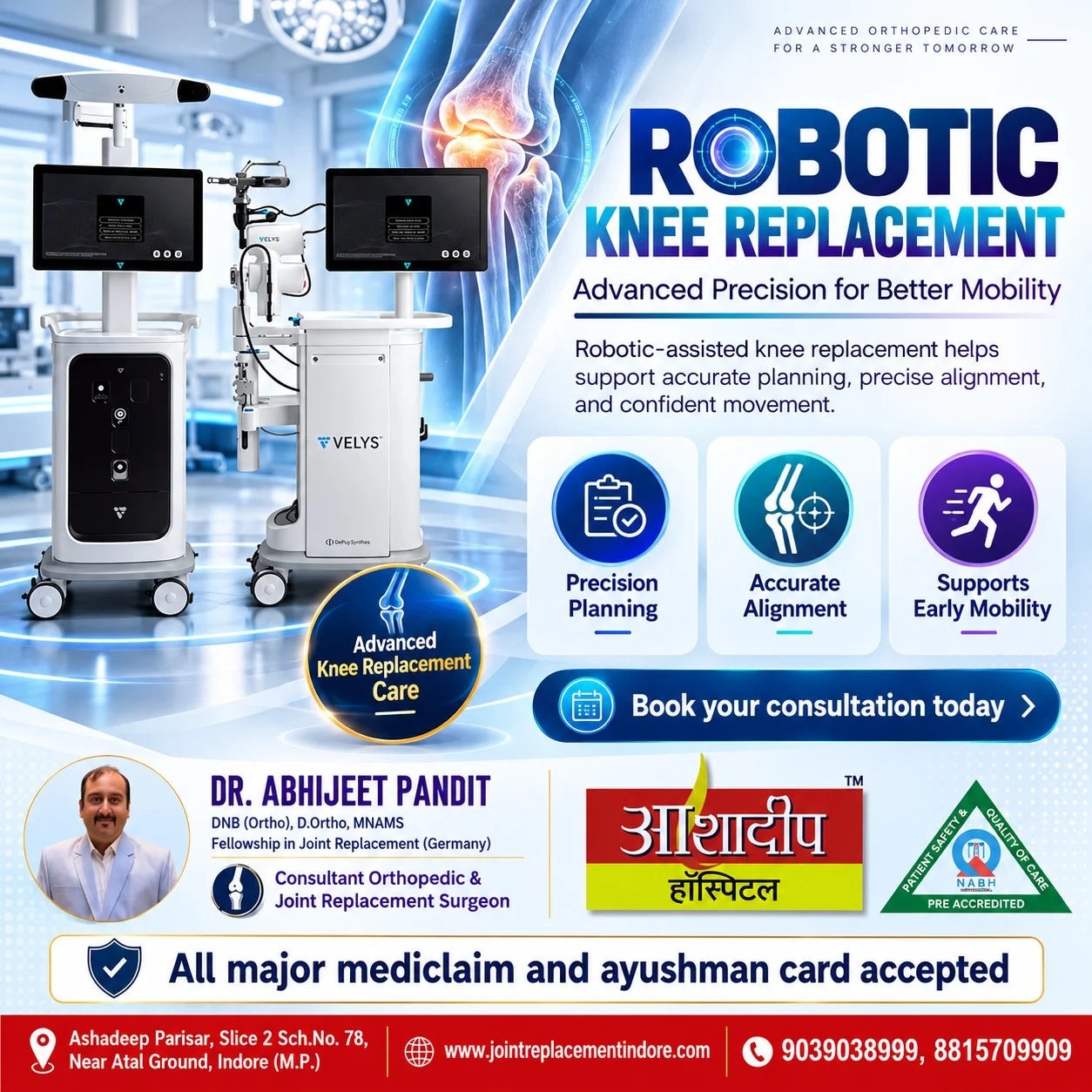
This procedure uses computer planning and robotic instruments to assist the surgeon during knee replacement. The technology provides information about the knee and helps guide the preparation of bone surfaces and positioning of implants.
During total knee replacement, damaged joint surfaces are replaced with artificial components. A medical-grade plastic insert allows these components to move against each other. Robotic assistance adds guidance to parts of this operation, while the surgeon directs the treatment and controls the instruments.
The decision depends on how much arthritis or joint damage affects your life. Age alone does not determine whether surgery is appropriate.
An orthopaedic assessment may be helpful when you experience:
Knee arthritis treatment may initially include suitable exercises, physiotherapy, medicines, walking aids or other measures. Surgery becomes a discussion when symptoms remain troublesome despite appropriate treatment and examination findings support joint replacement.
Each knee has its own shape, movement pattern and ligament balance. Robotic systems help the surgeon work with those individual features.
The surgical team collects information about the knee’s anatomy. Depending on the platform, planning may involve scans taken beforehand or measurements collected during the operation.
The surgeon uses the information to assess implant size, positioning and alignment. Planning software can help show how adjustments may affect the knee through its range of movement.
Robotic instruments support the surgeon in preparing the bone according to the agreed plan. Trial components allow assessment before the final implants are positioned.
The exact workflow depends on the equipment used and the requirements of the patient.
The main reasons for considering robotic assistance include:
These are technical advantages. Research continues into how improvements in positioning translate into long-term function and implant survival. The useful question is how the technology may help with your particular knee.
An experienced surgical team, appropriate patient selection and rehabilitation remain important parts of care. Discuss the expected benefits alongside the surgeon’s reasons for recommending this approach. AAHKS
When meeting a knee replacement surgeon in Indore, describe the activities you struggle with. “I cannot walk to the nearby shop comfortably” gives a clearer picture than simply saying the knee hurts.
Bring previous X-rays, medical reports and a list of medicines. Mention earlier operations, injections and physiotherapy, including whether they helped.
Useful questions include:
For local appointment planning, the location shown is Ashadeep Parisar, Slice 2, Scheme No. 78, near Atal Ground, Indore. Confirm consultation availability before travelling.
Preparation includes reviewing your general health and planning support at home. Tell the team about existing medical conditions, allergies and any previous problems with anaesthesia.
Follow the instructions provided about tests, medicines and preparation. Ask which exercises are appropriate before surgery.
At home, think through the route between your bed, bathroom and sitting area. Remove loose rugs, keep frequently used items within reach and arrange help with meals or transport. These practical changes can make the first days after discharge easier to manage.
Recovery happens in stages. The initial focus is pain management, safe movement and learning how to manage essential activities.
Nurses and physiotherapists usually help patients begin walking soon after surgery, when medically appropriate. A walker or crutches may be needed initially. Discharge depends on safe mobility, medical progress and the support available at home.
After discharge, follow the exercise programme and wound-care instructions supplied by your team. Physiotherapy helps develop strength, movement and confidence as activity gradually increases.
Some everyday tasks become easier before full recovery is complete. Improvement can continue for several months or longer. Your progress will depend on your starting condition, general health and rehabilitation.
Discuss walking, stairs, driving and returning to work separately, because each activity has different demands.
Possible complications include infection, blood clots, ongoing stiffness, persistent pain or injury to nearby nerves and blood vessels. Your health and the details of the operation influence individual risk.
Ask how the team will reduce these risks and which symptoms require prompt medical attention after discharge. Keep the hospital’s contact instructions accessible so you know whom to call if concerns arise during recovery. NHS
Request an itemised estimate for the proposed treatment. Ask whether it includes the implant, robotic assistance, anaesthesia, hospital stay, investigations and rehabilitation.
Clarify what could change the final bill, such as additional treatment or a longer stay. This helps families plan beyond the initial admission.
If you intend to use mediclaim or an Ayushman card, ask the hospital to confirm eligibility, authorisation requirements and which parts of the proposed treatment are covered. Card acceptance and coverage for a particular procedure should be checked before admission.
The surgeon controls the procedure and uses robotic instruments to assist with specific surgical steps. Clinical decisions remain with the operating surgeon.
Imaging requirements depend on the robotic platform. Some systems use a preoperative scan, while others use measurements collected during surgery. Your team can explain the preparation needed.
Assisted walking often begins soon after the operation when the clinical team considers it safe. The support required and pace of progress vary between patients.
Physiotherapy remains an important part of recovery. Your programme should match your movement, strength and functional needs, with exercises adjusted as you progress.
Pain has several possible causes. Examination, imaging and your response to previous treatment help determine whether surgery or another approach is suitable.
If knee pain is changing how you live, seek an assessment and discuss your options. For guidance on robotic knee replacement in Indore, consult Dr. Abhijeet Pandit at Ashadeep Hospital. Bring your reports, explain your priorities and ask what treatment can reasonably achieve.
Contact Us today to book your consultation and discuss a treatment plan suited to your knee condition.
| Tags: | #Robotic Knee Replacement in Indore |


