


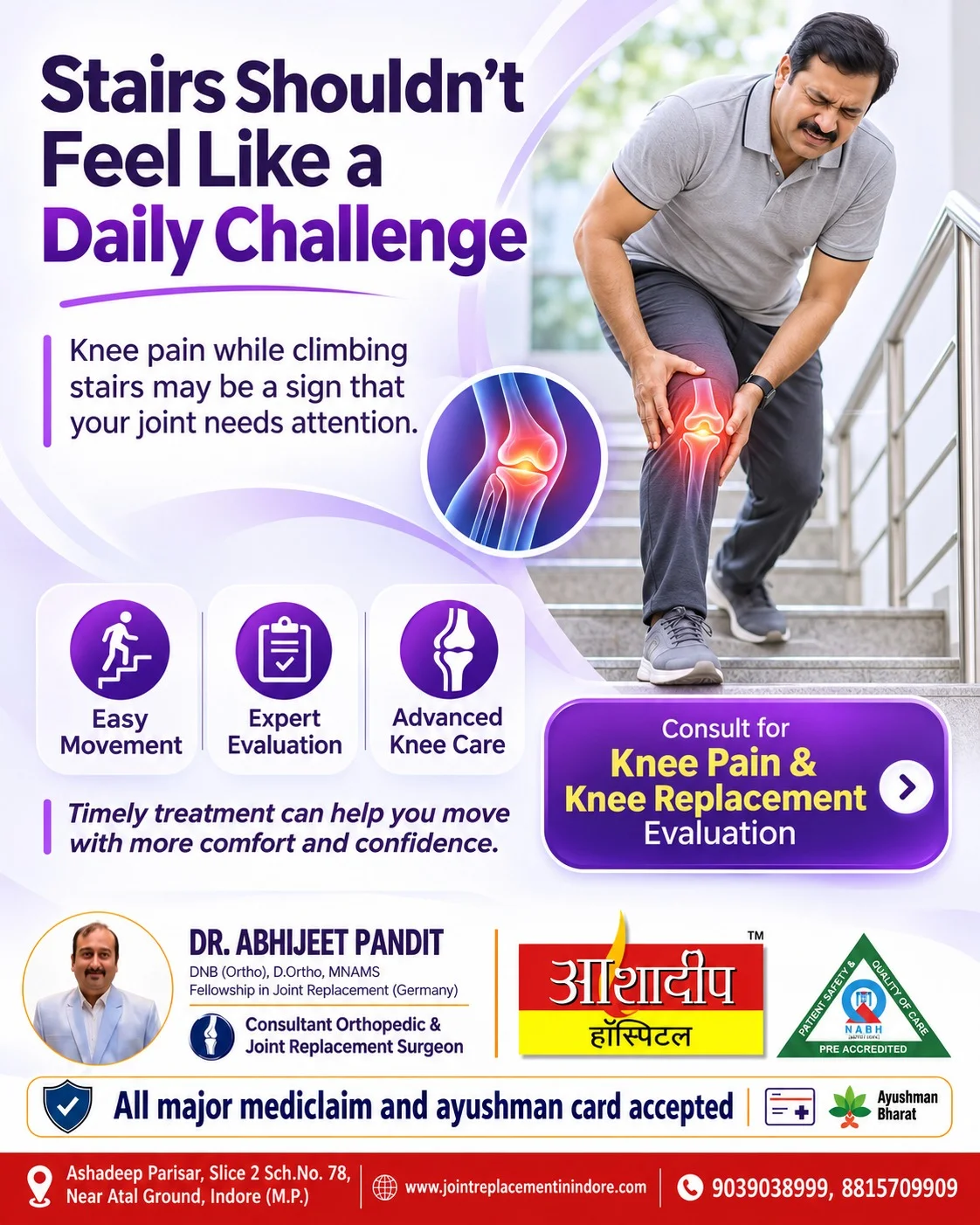
Knee Pain Treatment in Indore starts with understanding why the joint hurts. Pain during stair climbing can be associated with kneecap-related problems, osteoarthritis, or an injury. The appropriate treatment depends on the diagnosis, examination findings, and how symptoms affect daily life.
Perhaps you have started taking the lift for a single floor. You might pause before stepping down, hold the railing more tightly, or send someone else upstairs to collect something. These small changes are worth describing during a consultation because they show how much the discomfort is influencing your routine.
For an individual assessment, Dr. Abhijeet Pandit, Consultant Orthopedic and Joint Replacement Surgeon at Ashadeep Hospital, can evaluate your symptoms and discuss suitable next steps.
Using stairs involves repeated knee bending and the coordinated work of the muscles around the knee and hip. Problems around the kneecap can become more noticeable during activities such as stair climbing, squatting, or getting up after prolonged sitting.
The activity that triggers pain offers a clue, but it does not establish the cause. Tell the doctor whether discomfort occurs going up, coming down, or both, and where you feel it.
Patellofemoral pain describes discomfort at the front of the knee or around the kneecap. It can affect people who play sports as well as those who do not. Changes in activity, muscle weakness, and kneecap movement may contribute.
Someone with this problem may notice pain on stairs or after sitting with the knee bent for a long time.
Knee osteoarthritis can cause pain, stiffness, swelling, and difficulty moving the joint. Symptoms differ between people: some experience occasional discomfort, while others find everyday activities increasingly difficult.
Age can increase the likelihood of osteoarthritis, but a painful knee still needs assessment. The diagnosis should account for the symptoms and examination findings.
A twisting injury can damage the meniscus, the cushioning cartilage between the bones of the knee. Symptoms may include swelling, tenderness, restricted movement, or a feeling that the knee gives way.
Explain whether the pain started after a fall, a twist, exercise, or an ordinary movement. That history can help guide the examination.
Consider an orthopedic consultation in Indore when pain keeps returning, interferes with normal activities, affects sleep, or fails to improve. You do not need to wait until every step becomes difficult before discussing persistent symptoms.
Make a note of:
· How long the pain has been present.
· Whether one or both knees are affected.
· The exact location of discomfort.
· Swelling, stiffness, or changes in movement.
· Previous injuries and treatments already tried.
Some symptoms require urgent medical attention. Seek prompt care if you cannot bear weight, the knee is severely swollen or deformed, it locks, or it feels hot and swollen alongside fever or feeling unwell. A visibly deformed knee after injury needs emergency assessment.
The consultation usually begins with your history: when symptoms started, which movements are difficult, and what matters most to you. Being able to walk to nearby shops, manage stairs at home, or complete a working day are useful goals to explain.
The examination may assess knee movement, stability, strength, and leg alignment. Depending on the suspected cause, the doctor may recommend imaging or other tests. X-rays can help assess joint damage; an MRI may be useful for selected questions about soft tissues.
The findings should be discussed alongside your symptoms so you understand the diagnosis and proposed plan.
Many treatment plans begin with measures chosen for the underlying condition and the individual’s needs.
For osteoarthritis, therapeutic exercise is a core part of care. A suitable programme can include muscle strengthening and general fitness activities, with adjustments to match your ability.
The aim is to develop a manageable routine. Ask which exercises to perform, how to progress them, and what changes in symptoms should prompt a review.
A clinician or physiotherapist can help you adjust activities that aggravate symptoms while planning appropriate movement. Explain the demands of your home and job so the advice fits your day.
For someone whose routine involves repeated stair use, the plan may need to address both immediate discomfort and longer-term function.
Where appropriate, weight management can help people with knee osteoarthritis reduce symptoms and improve function. Any plan should be realistic and supportive.
Medicines may also be considered after reviewing your health conditions and current treatments. Ask about the expected benefits, possible side effects, and how long to use them. Selected patients may be offered additional treatments, including injections, after assessment.
A knee replacement evaluation in Indore may be appropriate when arthritis-related pain, stiffness, or reduced function substantially affects quality of life and suitable non-surgical care has been ineffective or is unsuitable.
The discussion should cover your symptoms, overall health, examination findings, and treatment history. It should also explain the likely benefits, surgical risks, rehabilitation, and realistic expectations.
An evaluation gives you information for a decision. Ask how the proposed treatment relates to your own goals and what support recovery would involve.
Bring previous reports, scan images if available, a list of medicines, and details of treatments you have tried. Include other health conditions that may affect treatment planning.
Write down two or three questions before you arrive. For example:
· What is the likely cause of my pain?
· Which treatment should I begin with?
· How will we assess whether it is helping?
· When should I return for review?
For patients travelling within Indore, confirming appointment arrangements beforehand can make the visit easier to organise.
No. Kneecap-related pain and injuries can also cause symptoms during stair use. The location of pain, how it began, and the examination help distinguish between possible causes. Avoid choosing treatment from the symptom alone.
An MRI is not necessary for every painful knee. The doctor decides whether imaging is useful based on the suspected condition and examination. Many cases of osteoarthritis can be diagnosed clinically without routine imaging.
The appropriate activity level depends on the cause and severity of symptoms. For osteoarthritis, tailored exercise is an important treatment. Ask for guidance on suitable activities, progression, and how to respond to discomfort during the programme.
Stair difficulty is one part of the assessment. Surgery is considered in the context of the diagnosis, overall impact on daily life, and response to suitable treatment. A consultation can clarify which options apply to you.
Yes. Patellofemoral pain can affect young adults, including people who are not athletes. Pain at the front of the knee during stairs, squatting, or prolonged sitting deserves assessment when it persists or limits activities.
If stairs are changing how you move through your day, take the opportunity to understand the cause. For Knee Pain Treatment in Indore, consult Dr. Abhijeet Pandit at Ashadeep Hospital to discuss your symptoms and care options.
Visit Ashadeep Parisar, Slice 2, Scheme No. 78, near Atal Ground, Indore. Call to enquire about an appointment.
Contact Us to arrange your knee evaluation and discuss a plan for more comfortable movement.
| Tags: | #Knee Pain Treatment in Indore |


